Why Dark Interiors Work: Designing with Depth, Mood & Modern Luxury

There is something undeniably powerful about a dark interior. It is not simply a colour choice — it is a design decision rooted in atmosphere, intention, and emotional depth. While light, neutral spaces often dominate social feeds, darker interiors create a different kind of experience. They invite you in. They slow you down. They hold you.
As a designer drawn to modern luxury spaces, I am continually fascinated by how depth of tone can transform an ordinary room into something cinematic and grounded. When executed well, dark interiors feel sophisticated, layered and timeless — never heavy or overwhelming.
The key lies not in the darkness itself, but in how it is handled.
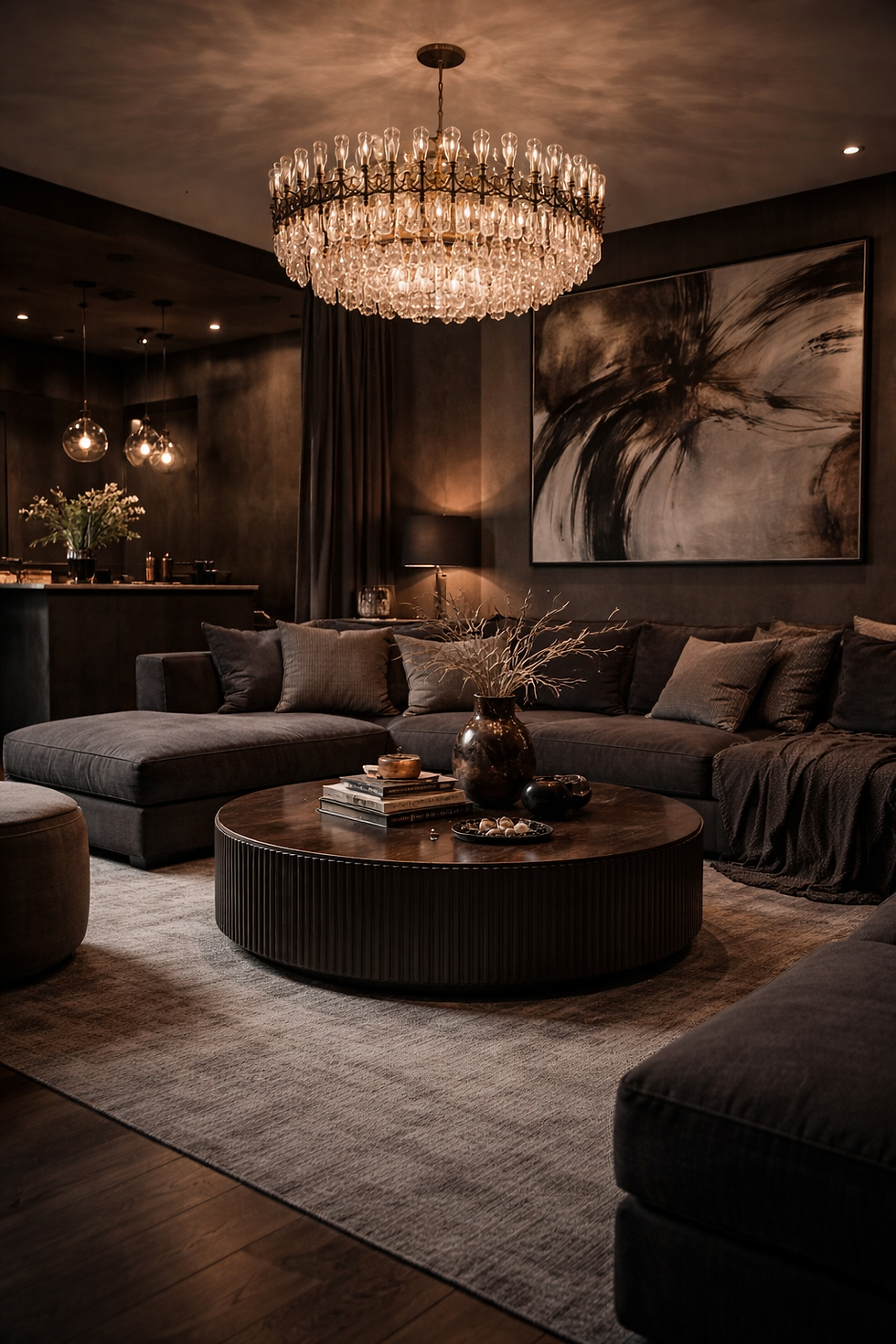
The Psychology of Dark Interiors
Colour influences perception more than we realise. Deep charcoals, warm browns, muted blacks and espresso tones create a sense of enclosure and calm. Unlike bright white rooms that reflect light outward, darker palettes absorb light, softening the environment and creating intimacy.
This is why moody interiors often feel:
Restful
Cocooning
Grounded
Elevated
Luxury is not always about brightness. Often, it is about restraint. Dark spaces communicate confidence. They feel intentional rather than decorative.
When balanced properly, they evoke boutique hotels, penthouse apartments and tailored architectural spaces — environments designed to be experienced, not just viewed.
The Design Formula Behind a Successful Dark Room
A dark interior works only when supported by thoughtful layering. Without balance, a room can feel flat or oppressive. With intention, however, it becomes dimensional and refined.
There are five key principles I follow when designing darker spaces:
1. Lighting is Architectural
In moody interiors, lighting is not an afterthought — it is structure. Layered lighting is essential:
Soft ambient lighting to wash walls
Accent lighting to highlight texture
Warm-toned bulbs to prevent harshness
Wall sconces, table lamps and statement pendants help break up shadow and create visual rhythm.
2. Texture Creates Depth
When colour variation is subtle, texture becomes the hero.
Velvet upholstery, brushed metals, natural wood grains, stone surfaces and woven textiles prevent a dark scheme from appearing one-dimensional. Matte finishes absorb light beautifully, while subtle sheen adds contrast.
Layering materials rather than colours keeps the room sophisticated.
3. Warmth Prevents Starkness
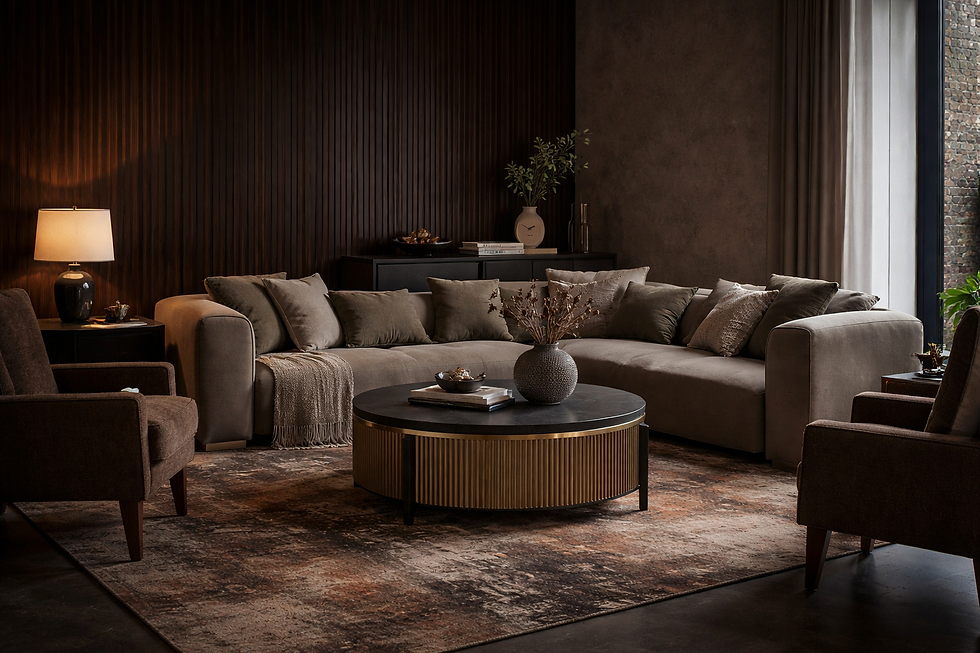
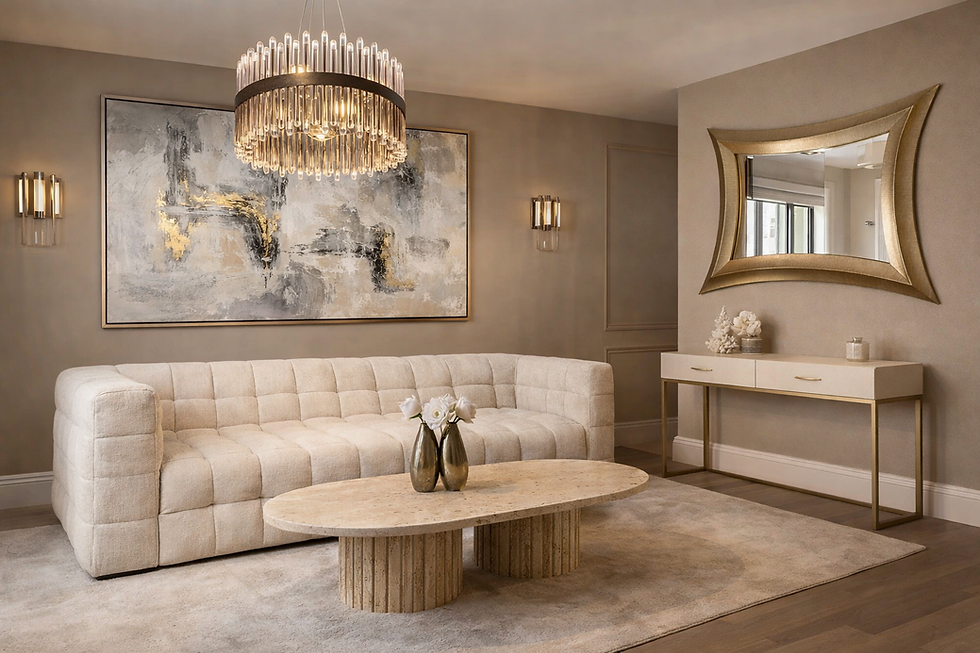
Cool blacks and greys can feel clinical if unsupported. Introducing warm undertones — walnut wood, aged brass, warm taupe linens — softens the palette and maintains comfort.
Modern luxury interiors rarely rely on flat black alone. They blend tonal warmth with depth.
4. Contrast is Essential
Even in dark rooms, contrast must exist. This may come through:
Lighter upholstery
Oversized neutral artwork
Cream or stone-coloured rugs
Natural light framed by darker walls
Contrast gives the eye somewhere to rest.
5. Scale and Proportion Matter
Large, grounded furniture pieces often work best in moody interiors. Oversized sectionals, substantial coffee tables and statement lighting prevent the room from feeling fragmented.
Dark spaces benefit from confidence in scale.
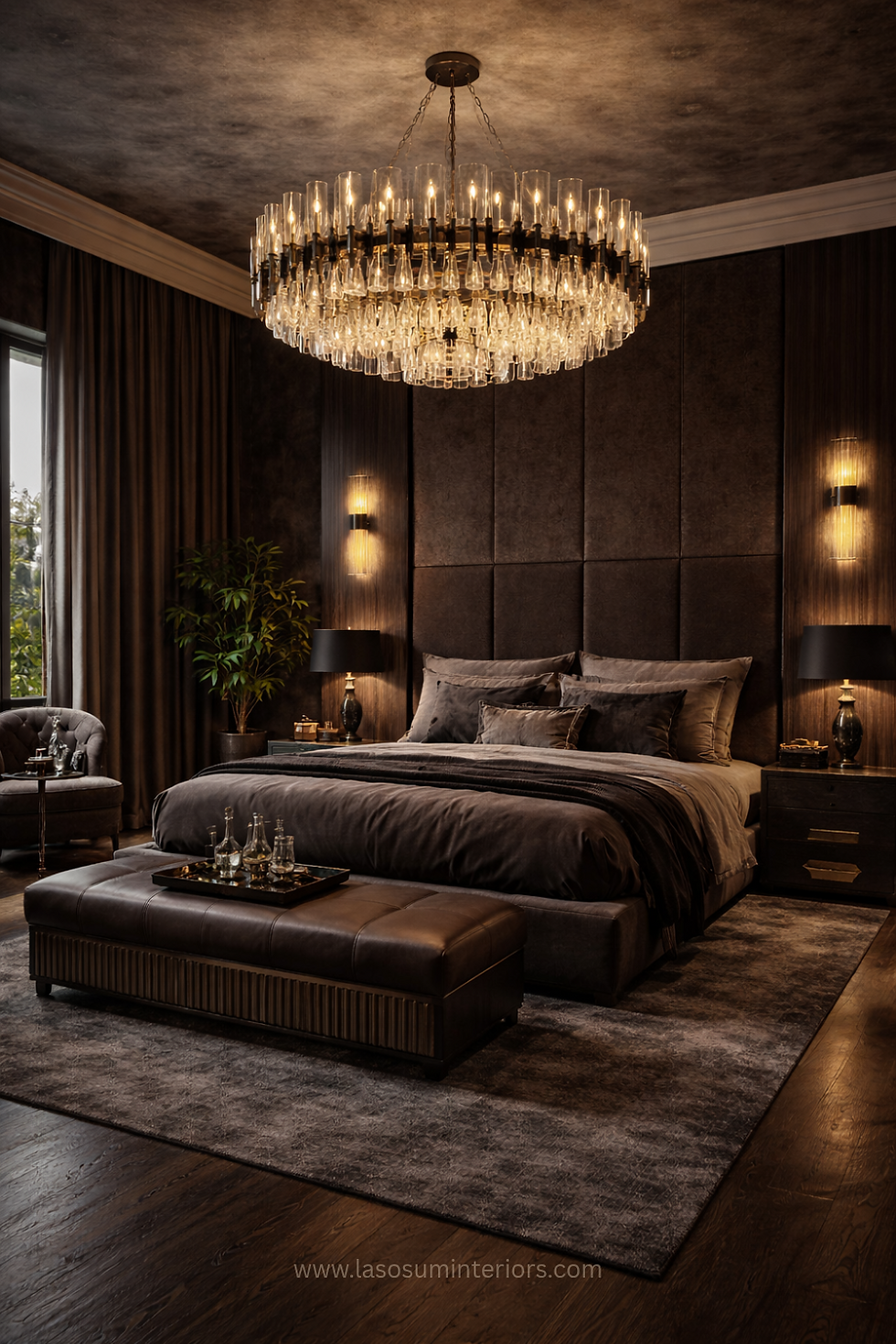
Materials That Elevate Dark Interiors
Certain materials consistently enhance depth-driven schemes:
Walnut and dark oak for warmth
Brushed brass for soft luminosity
Linen and boucle for contrast
Marble or stone for refinement
Layered neutral textiles to soften structure
These elements introduce movement and light reflection without disrupting the palette.
The goal is cohesion, not chaos.
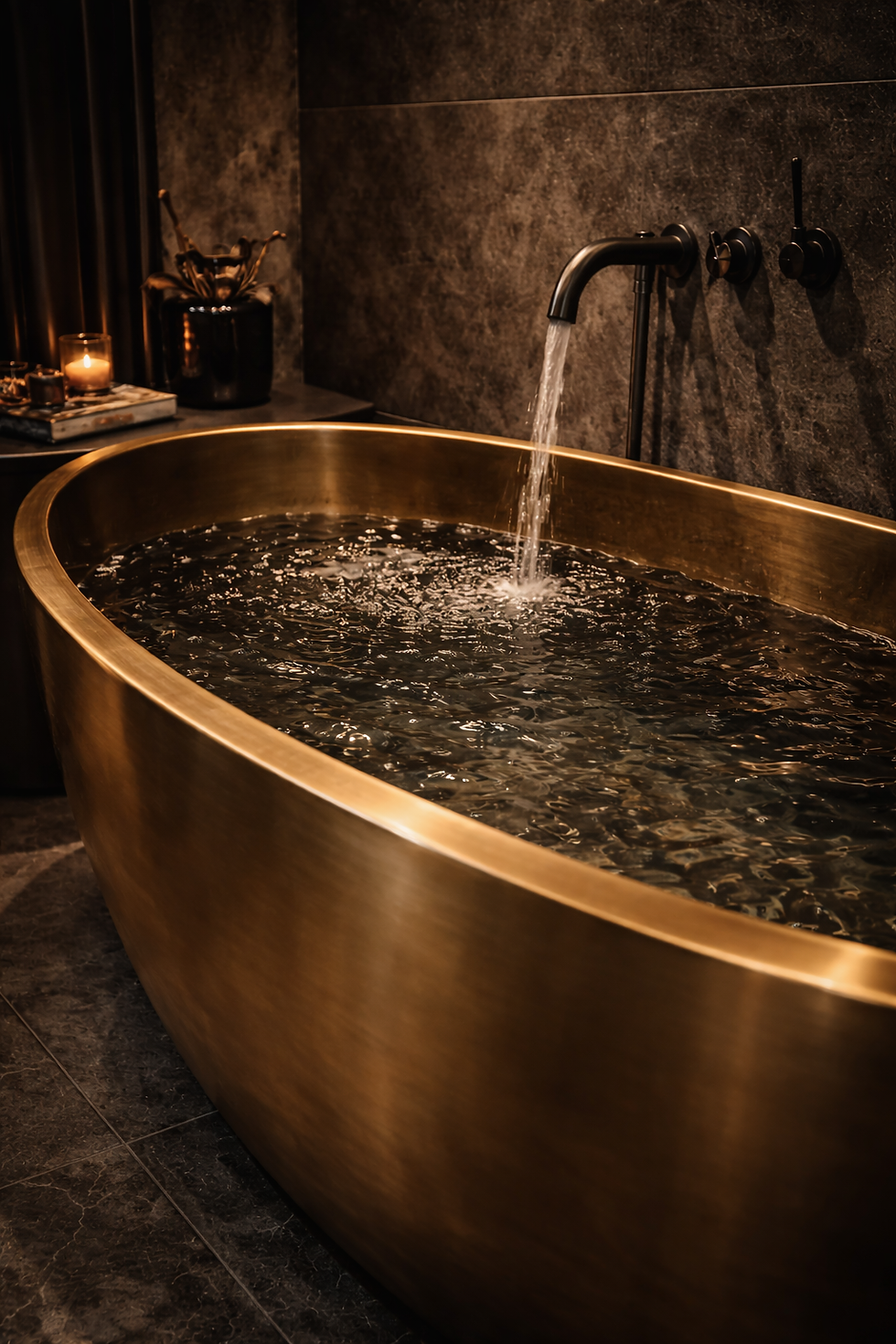
Common Mistakes in Dark Interiors
When dark spaces fail, it is usually due to one of three issues:
Insufficient lighting
Lack of texture
Flat, single-tone execution
Dark interiors require nuance. Without variation in finish and tone, the room loses dimension.
Designing with depth means working with shadow, not against it.
Designing with Intention
Ultimately, dark interiors are not about trend. They are about atmosphere. They create a feeling of permanence and sophistication that transcends seasonal styling.
When approached thoughtfully, darker palettes feel modern yet timeless. Bold yet calming. Structured yet welcoming.
In my upcoming Dark Edit, I explore how these principles translate into curated modern luxury spaces — where depth, texture and warmth combine to create rooms that feel both powerful and personal.

Comments